By Macy Byars, Nebraska Public Media
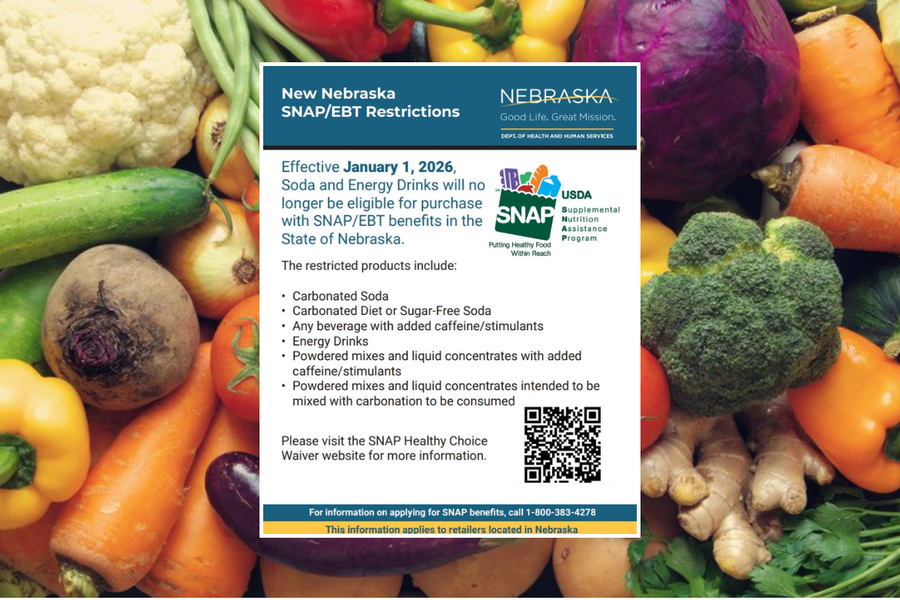
For those making food purchases with an EBT card in Nebraska, sugary and caffeinated beverages are off the table starting Thursday. About 75,000 Nebraska households receiving SNAP benefits will be barred from buying soda, soft drinks and energy drinks.
Nebraska’s Department of Health and Human Services (DHHS) has defined the restricted items on an FAQ webpage:
- A soda or soft drink is “any carbonated non-alcoholic beverage that contains water, a sweetening agent, flavoring and carbon dioxide gas to create carbonation.”
- And energy drink is a beverage that contain stimulants like caffeine or taurine “formulated to enhance energy, alertness or physical performance.”
Restrictions do not apply to products such as hydrating sports drinks, mineral water, fruit and vegetable juices, liquid food substitutes, and coffee and teas with no added caffeine.
Nebraska DHHS said retailers are responsible for updating their point-of-sale systems to exclude the newly restricted items.
In May, Nebraska became the first state to have a federal waiver approved by the U.S. Department of Agriculture banning soda and energy drinks. The state requested the waiver in April, citing negative effects of caffeine on children and the risk of chronic disease.
“There’s absolutely zero reason for taxpayers to be subsidizing purchases of soda and energy drinks,” Pillen said in a press release Wednesday afternoon. “SNAP is intended to help families access nutritious food, and there’s nothing healthy about what we are removing through this waiver. “
The release referenced studies connecting soda and caffeine consumption to problems like “withdrawn behavior and attention problems,” diabetes, tooth decay, compromised bone health and mental health issues.
“According to the USDA, soft drinks are the most frequently purchased SNAP item nationwide,” the release said.
The most recent USDA data on the topic is a 2016 analysis of 2011 transaction data from a leading grocery retailer, listed on a USDA webpage updated this January. This analysis found “more money was spent on soft drinks than any other item.” However, “Meat, Poultry and Seafood” was ranked as the top spending category, while “Sweetened Beverages” was ranked second. SNAP households spent 1% more on soft drinks than non-SNAP households, and the report notes that spending differences between the two groups “were relatively limited.”
Nebraska is one of 18 states to adopt similar restrictions.
New restrictions also go into effect on Thursday in Indiana, Iowa, Utah and West Virginia. Iowa’s restrictions include soda, candy and certain prepared foods.
SNAP recipients from other states will not be able to buy soda and energy drinks in Nebraska. However, a Nebraska EBT card could potentially be used to buy them in other states without similar restrictions.
Waivers can be granted if a state’s proposed regulation change “would result in a more effective and efficient administration of the program.” No other presidential administration has approved such waivers for SNAP.
The restrictions align with the Trump administration’s “Make America Healthy Again” initiative, spearheaded by U.S. Department of Health and Human Services Secretary Robert F. Kennedy Jr.
“We cannot continue a system that forces taxpayers to fund programs that make people sick and then pay a second time to treat the illnesses those very programs help create,” Kennedy said in a Dec. 10 USDA press release.
The “MAHA” initiative is vying for policy changes that prevent and treat chronic disease, promote healthy lifestyles, and restrict processed foods. Reducing prescription drug costs and overturning existing vaccine recommendations are also touted as MAHA-related achievements.
During 2025’s 43-day government shutdown, Nebraska’s SNAP program was paused for two weeks when funds ran out, increasing the volume of people seeking assistance from food banks. Relief never came for refugees, who are no longer eligible for the program following the passage of the “One, Big Beautiful Bill Act.” Work requirements for able-bodied adults aged 18-65 were also implemented under the bill.
Stay informed about what’s happening in your community. Your source for stories that inspire — visit HolaNebraska.org for news, culture, and community updates across Nebraska!