
Photos courtesy of Socorro Carrera-Sosa
–
By Karlha Velasquez Rivas, Hola Nebraska.
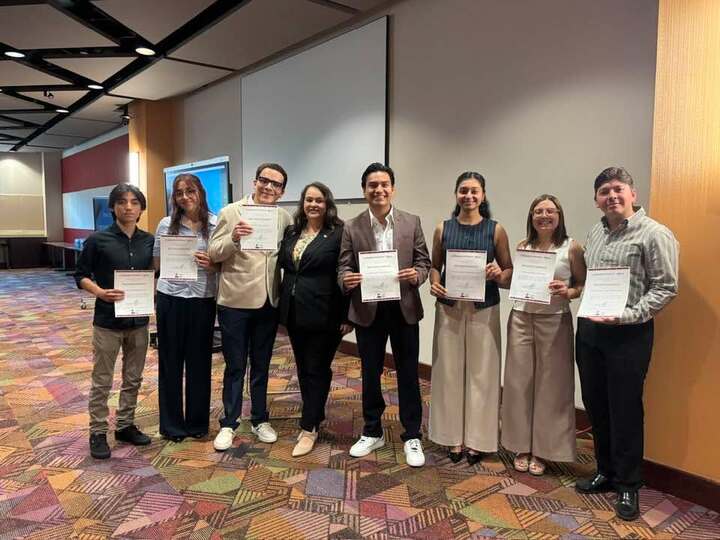
Seven Latino students spent seven weeks working with Bellevue University mentors on projects involving microbiology, educational leadership, creative thinking, business and problem-solving.
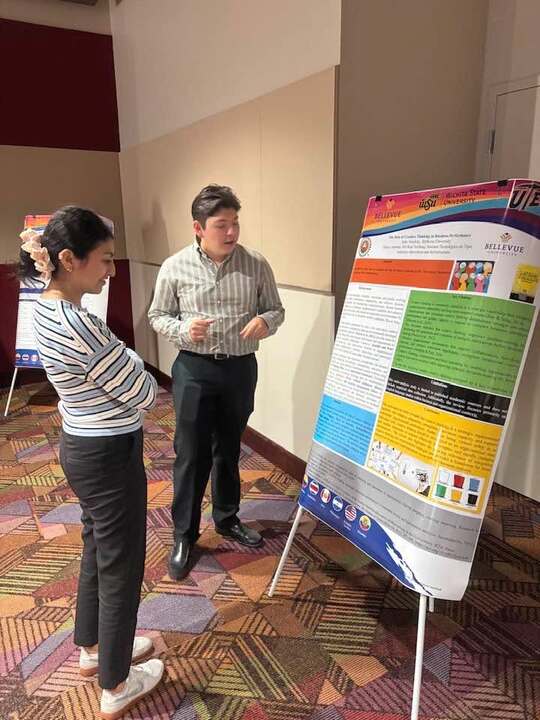
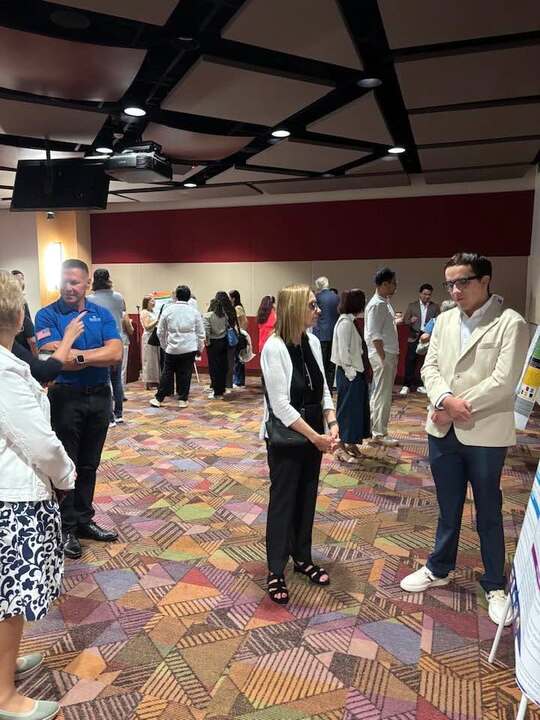
Before the presentations began, the posters offered a preview of what the morning would bring. Charts, scientific concepts, research questions and findings filled Bellevue University’s John B. Mueller Administrative Services Building. Soon, the students themselves stepped forward to explain what they had studied, how they approached their work and what they learned along the way.
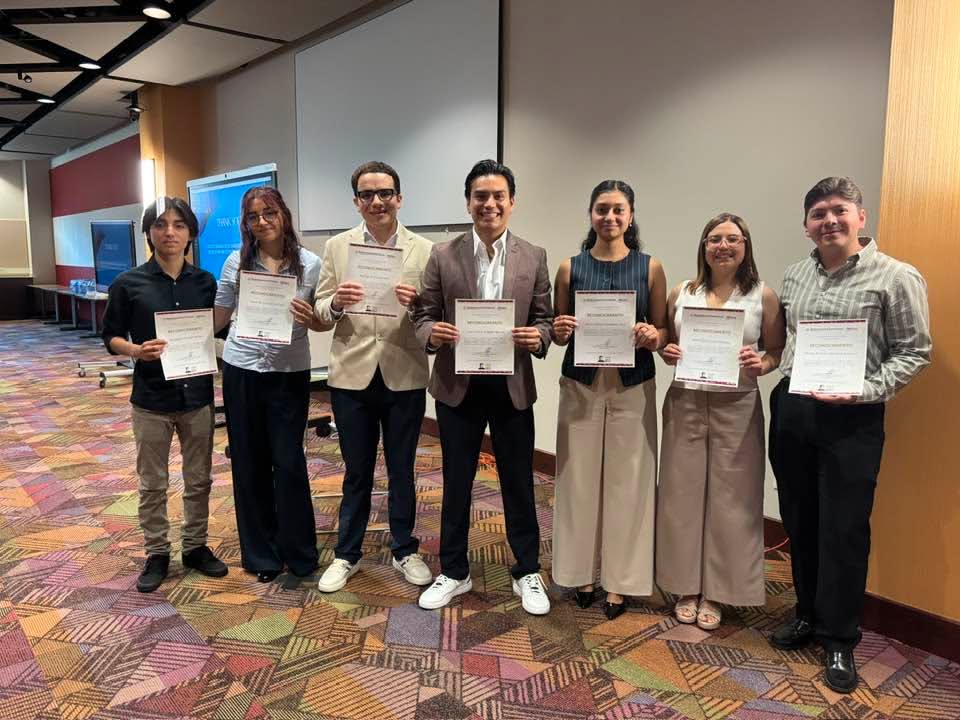
On July 21, seven Latino students presented the projects they developed during the summer of 2026 through Programa Delfín. For seven weeks, they worked alongside Bellevue University faculty members on research involving microbiology, educational leadership, creative thinking, business and problem-solving.
The Delfín Summer Research Expo brought together professors, mentors, university leaders, consular representatives and members of the campus community.
Socorro Carrera served as the event’s emcee and congratulated the students for the work they completed with their research teams. She also emphasized that the program offers more than an academic experience by creating opportunities for cultural exchange between the United States and Latin America.
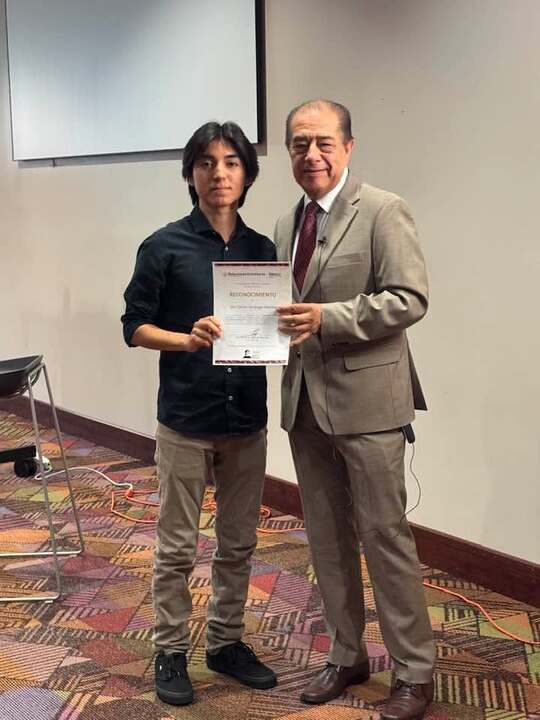
Dr. Armando de Alba Rosales and Bellevue University professor and researcher Dr. John Kyndt also participated. Jorge Ernesto Espejel Montes, Mexico’s head consul in Omaha, attended as a special guest. He expressed pride in the students’ work and encouraged them to continue building connections between countries and universities through research.
The students who presented their projects were Lluvia de Luna García Sainz, Ivana Castellanos Morales, Ian Carlos Verdugo Molina, María Melany Mayboca Trejo, Marco Antonio del Real Arellano, Rodrigo Quiroz Barreto and Carlos Emilio Angeles Aguirre.
The 2026 program also included students who participated virtually from Mexico and Colombia, extending the collaboration beyond Bellevue’s campus.
From bacteria to creative thinking
Lluvia de Luna García Sainz, Ivana Castellanos Morales and Ian Carlos Verdugo Molina worked under Kyndt’s mentorship to analyze the genomes of newly identified bacterial species found in extreme environments.
Castellanos Morales, a student at Universidad Anáhuac Veracruz, participated in research involving bacteria capable of surviving in environments contaminated by hydrocarbons.
Speaking in fluent English, she described the project through a situation that is easy to picture: an oil spill and the need to find ways to reduce its environmental damage.
“We are studying bacteria that can help break down hydrocarbons, for example after an oil spill. Understanding how they work could contribute to solutions for environmental remediation,” Castellanos said.
Although the organisms are microscopic, their potential applications could help restore areas affected by spills and other forms of contamination.
For Ivana, the program also offered an opportunity to work with unfamiliar tools, collaborate with researchers at another university and experience a different approach to scientific research.
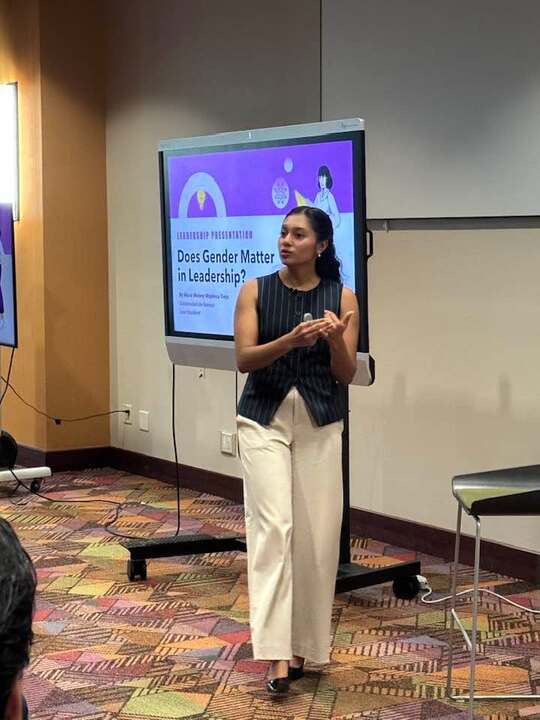
In another field, María Melany Mayboca Trejo, a student at the University of Sonora, completed a project on educational leadership under the mentorship of Dr. Michelle Kempke Eppler.
Marco Antonio del Real Arellano, Rodrigo Quiroz Barreto and Carlos Emilio Angeles Aguirre developed projects related to creative thinking with Julie Verebely.
Their research explored how creativity can help companies and organizations address problems, respond to change and develop new ways of working.
For Marco Antonio del Real Arellano, an industrial engineering student at the Instituto Tecnológico de Tepic and a second-year participant in Programa Delfín, creativity is not limited to art. It can also serve as a practical tool for addressing professional challenges.
“Creative thinking pushes us as young people to explore new horizons and not rely only on traditional ways of doing things,” he said. “It helped me understand that creativity can also become a tool for solving problems and generating innovation.”
His research also examined the resistance that some people and organizations may have toward technological advances. From his perspective as an industrial engineering student, technical knowledge and creative thinking can complement one another.
Ivana and Marco Antonio’s experiences show the range of research available through Programa Delfín. One project examined bacteria with possible environmental applications, while another explored how businesses respond to technological change.
The subjects were very different, but both began in the same place: with a question and the desire to find answers.
What is Programa Delfín?
Its official name is the Inter-Institutional Program for Strengthening of Research and Graduate Studies in the Pacific, although it is widely known as Programa Delfín.
The initiative began in Mexico to encourage students’ interest in research, strengthen collaboration among universities and motivate young people to continue their academic preparation.
Participants join projects led by researchers at other institutions. Their placements may be completed in person or virtually, and the opportunities extend beyond laboratories and the traditional sciences.
Dr. Michelle Kempke Eppler, dean of Bellevue University’s College of Arts and Sciences and the university’s Delfín coordinator, said students from many academic backgrounds can find opportunities within the program.
“There is a little bit of something for everyone,” she said. “There is scientific research, but we also have leadership, behavioral sciences, education and learning.”
For Kempke Eppler, one of the program’s most important goals is teaching students what to do when a subject sparks their curiosity.
“The idea is that when they become curious about something, they learn how to find out more about that topic, what steps they need to take and how to turn that process into some type of outcome,” she said.
Students first receive support from their home universities. They then review the available research areas, identify projects connected to their fields of study and submit their applications.
Faculty members interview candidates to learn about their interests, previous experience and the tools they have used. They then develop a work plan for the students’ research placements.
As coordinator, Kempke Eppler also supports participating faculty members, reviews documents and helps ensure that each student has clear objectives throughout the program.
An experience beyond the classroom
The students’ seven weeks in Nebraska were not devoted only to meetings, reading and experiments. They also had opportunities to explore the community, participate in cultural activities and adjust to a different university environment.
Presenting their work before an audience allowed them to practice another essential research skill: explaining clearly why a subject matters and how their findings could be useful.
For Kempke Eppler, some of the program’s most meaningful moments occur when former participants return to share their experiences and support new students.
“I may deeply love this program, but I would rather the students love it even more,” she said. “When our alumni return, share their experience and help others, we feel that we are accomplishing that purpose.”
By the end of the expo, the seven students had done more than present the results of their summer research. They had also demonstrated their ability to investigate, collaborate, adapt to a new environment and communicate their knowledge to an international audience.
Students interested in future editions can visit the official Programa Delfín website to review upcoming calls for applications and available research projects. They can also determine whether their home universities participate in the program and request guidance on beginning the application process.
See the complete photo gallery from the event
Photos courtesy of Socorro Carrera-Sosa
Photos courtesy of Socorro Carrera-Sosa
Photos courtesy of Socorro Carrera-Sosa
Photos courtesy of Socorro Carrera-Sosa
Photos courtesy of Socorro Carrera-Sosa
Stay informed about what is happening in your community. Visit HolaNebraska.org for news, culture and community updates across Nebraska.