
In an opinion column, Omaha-based CIRA describes the experience of a refugee family affected by Medicaid eligibility changes and raises concerns about access to medical care.
Opinion | Media Partner: Center for Immigrant & Refugee Advancement (CIRA)
Originally published by CIRA on October 19, 2026. Republished by Hola Nebraska with attribution to the original author. The opinions expressed are those of CIRA.
An 18-month-old baby waddled over to his father, who was lying immobile on the floor of their home. The father, although clearly happy to see his son, wheezed as the baby tumbled onto his chest. The father “Ahmad” struggled to breathe. His paralyzed legs outstretched in front of him on the floor, and slowly, he shut his eyes while his wife told their story.
This family, who had struggled to survive in their home country, came to a new place based on a promise of protection, and actively served their community. But they lost their only way to pay their medical bills when Medicaid cuts took effect on Oct. 1. The law eliminates refugees and asylees without green cards from Medicaid access.
Ahmad’s family escaped from a war-torn country and entered the U.S. following all of the rules. They have legal status and are waiting for green cards, which have a backlog of longer than two years. The backlog exists because this administration has prioritized chaotic enforcement instead of processing applications. The U.S. promised to protect people, then pulled the rug out from under their feet by saying we don’t care if you live.
The mother “Laila” splits her time between caring for Ahmad and her four children during the day, then leaves at night to work as a home caregiver, paid by a Medicaid plan, for someone else. Her job does not offer any healthcare benefits, but it is the only one flexible enough to allow her to tend to her at-home responsibilities while still making an income.
Laila cares for someone else, even though her family’s access to healthcare was cut. Ahmad has accepted that without medical care, he will die. Laila cried as she also came to that conclusion. The baby, who is still too young to understand, took a nap.
Considering social work is one of our service pillars, we follow a code of ethics that roots us in humanity. And with those roots in mind, we think about the human impact of changes like losing Medicaid.
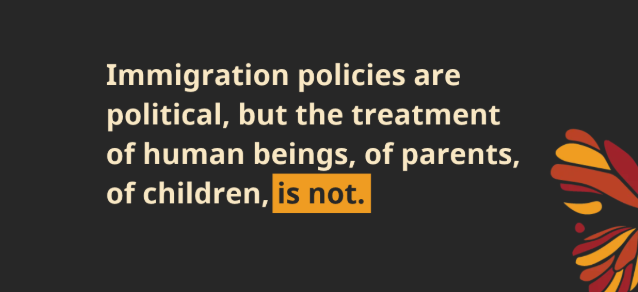
We know immigration policies are political. But the treatment of human beings, of parents, of children, is not.
The shortsighted attempt at saving money by limiting healthcare to our own people here is not worth the deaths that will follow. Denying affordable preventative care is not worth overwhelming our emergency healthcare systems that are meant to serve everyone — U.S. citizens and non-U.S. citizens alike.
We have created a dark history for our country. We created a system where politicians decide if people here live or die based on where they were born. Decades from now, history books will detail how the U.S. put politics above life, and the devastation brought to people of all immigration statuses.
Families have asked us what their options are. And we have had heartbreaking conversation after heartbreaking conversation in which we have to tell them that they have limited options.
We tell them they can try their luck at low-cost or free clinics, but those only offer limited services. Many have long wait times and limited availability. Keep in mind, this will only get worse as they become overwhelmed with people who have lost Medicaid.
We tell them they can try to find a job that offers healthcare, but without a more permanent immigration status, employers are hesitant to hire them.
We tell them they can apply for healthcare through the Marketplace, but that is temporary and will end when the same access restrictions are implemented starting in January.
Consider which side of history you want to stand on. And consider if you want to stand on the side of politics, or on the side of humanity.
Original publication: This opinion column was published by the Center for Immigrant & Refugee Advancement (CIRA) on October 19, 2026. It is shared as media partner content. The first-person account, assessments and opinions belong to CIRA.
Editor’s note: Nebraska Medicaid and Marketplace eligibility
The following information is provided by Hola Nebraska and is separate from CIRA’s opinion column.
Federal eligibility changes took effect in Nebraska on October 1, 2026. Some refugees, asylees and other noncitizens without lawful permanent resident status may no longer qualify for full Medicaid. However, exceptions remain, including for certain lawfully present pregnant women and children under 19 who meet the program’s other requirements.
Nebraska Medicaid reviews eligibility individually. Members should not assume their coverage has ended without an official determination or notice from the state.
Beginning January 1, 2027, new federal rules also restrict which lawfully present immigrants can qualify for financial assistance through the Health Insurance Marketplace. These changes do not necessarily prevent every affected person from purchasing a Marketplace plan without subsidies.
The current rules are available through Nebraska DHHS’s Medicaid eligibility information for noncitizens and HealthCare.gov’s Marketplace eligibility information.
Related reporting: Nebraska Medicaid rules have changed: Who remains eligible and what to do if you receive a notice.
Medicaid eligibility questions can be directed to Nebraska DHHS at 855-632-7633. Notices and case information are also available through iServe Nebraska.
Stay connected with local news and community resources across Nebraska at HolaNebraska.org.