
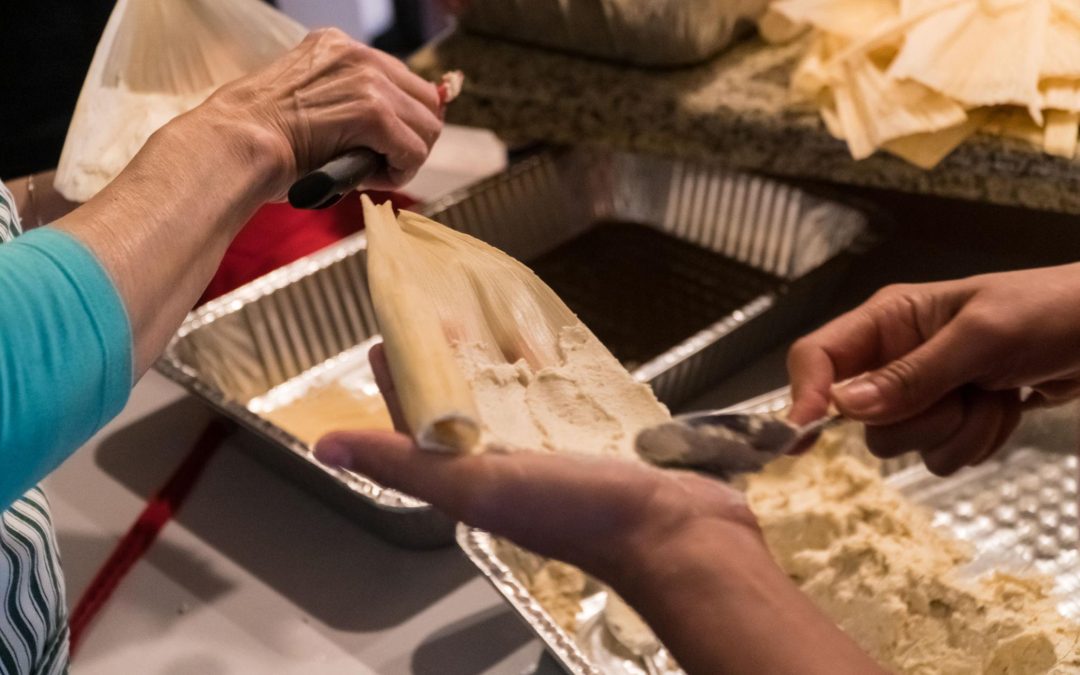
For an Omaha mother and daughter, Thanksgiving includes pork tamales made from a grandmother’s recipe. Their family tradition offers a glimpse of how Latino households in Nebraska bring different culinary histories to an American holiday.
By Hola Nebraska
OMAHA, Neb. — For Celia Remijio and her mother, Lela, the holiday cooking includes pork tamales. The two women prepare them for Thanksgiving and Christmas using a family recipe passed down from Celia’s grandmother, according to a profile published by Douglas County in January 2026.
Both work at the Douglas County Attorney’s Office. Their holiday tamale-making tradition began about 15 years ago, although the recipe itself goes back further. The county’s account describes a family activity that brings multiple generations together around a dish with roots in Mexican cooking.
Thanksgiving falls on Thursday, November 26, in 2026. Across Nebraska, the holiday will mean different things to different households. A traditional turkey dinner may be part of the celebration, but some families also prepare foods tied to their cultural backgrounds, personal histories and everyday cooking.
A grandmother’s recipe keeps pork tamales on the holiday table
The Remijio family’s tamales are made with seasoned pork and corn masa, wrapped in corn husks and steamed. The ingredients are familiar in many Mexican kitchens, but the recipe belongs to a particular family and has been passed down through generations.
In the Douglas County employee newsletter, Celia described the annual tradition:
“We make tamales for Thanksgiving and Christmas every year.”
The family profile traces the recipe to Celia’s grandmother. It also describes how preparing the tamales together has become part of the family’s holiday routine, rather than simply another dish served at dinner.
Tamales take time to make. The masa must be prepared, the filling assembled and the husks wrapped before the food can be steamed. Sharing that work gives several generations a role in preparing the meal.
The Remijios’ experience is one documented Nebraska example, not a representation of how all Latino families celebrate Thanksgiving. Different households prepare different dishes, and some do not observe the holiday.
Latino Nebraskans have roots in Mexico, Central America and the Caribbean
Hispanic or Latino residents account for 14.4% of Nebraska’s population, according to the U.S. Census Bureau’s QuickFacts profile.
A June 2025 report from the Nebraska Commission on Latino-Americans, drawing on American Community Survey data from 2019–2023, found that approximately 69.6% of the state’s Hispanic or Latino population was of Mexican origin. Residents of Guatemalan, Salvadoran, Puerto Rican, Cuban and other backgrounds also contributed to the state’s diversity.
Those figures describe ancestry, not holiday customs. There is no single menu that can be assigned to an entire population, even among people with roots in the same country.
Food traditions also differ within individual countries. Mexican tamales, for example, vary by region and household in their fillings, seasonings, preparation and wrapping. Central American and Caribbean cuisines bring their own ingredients and techniques.
In Nebraska, those differences are visible beyond the dinner table. South Omaha has a long history of Mexican and Central American businesses, while communities in places such as Grand Island and other parts of the state have also developed distinct Latino cultural and food traditions.
Turkey with mole, pavochón and roast pork offer different holiday flavors
Turkey remains a familiar Thanksgiving centerpiece, but the way it is prepared can vary considerably.
In Mexican cooking, mole is one possible accompaniment. The sauce has numerous regional varieties and can incorporate dried chiles, spices, seeds and other ingredients. Serving turkey with mole is one way to combine an American holiday dish with a Mexican culinary tradition.
Puerto Rican pavochón offers another variation. The name combines pavo and lechón, reflecting a turkey seasoned with flavors associated with Puerto Rican roast pork. Garlic, oregano, citrus and other seasonings are used in different pavochón recipes.
Some Cuban American families serve roast pork with mojo, black beans and rice or yuca alongside, or instead of, the more familiar turkey dinner.
These preparations are examples from broader Latino food traditions in the United States. They should not be mistaken for a survey of Nebraska Thanksgiving menus. The Remijio family’s documented pork tamales provide a specific local account; other households may have entirely different traditions.
A traditional Thanksgiving dinner costs 6% more nationally in 2026
The cost of preparing a holiday meal is also part of Thanksgiving in Nebraska this year.
The American Farm Bureau Federation’s 2026 Thanksgiving survey estimates that a traditional dinner for 10 people costs an average of $58.63 nationally, up approximately 6% from 2025.
The average for the Midwest was $56.89 for 10 people. These are survey estimates for a defined basket of traditional Thanksgiving foods, not the price of a particular Nebraska family’s groceries.
The survey also does not account for the additional or different ingredients that some households may use, such as corn masa, dried chiles, pork or ingredients for regional sauces.
For families preparing several dishes from different culinary traditions, the final grocery bill depends on the menu, the number of guests, store prices and ingredients already available at home.
Omaha Latino officers distributed 150 Thanksgiving meal boxes
The importance of access to holiday food was also evident in Omaha on November 21, 2026, when the Latino Law Enforcement Officers of Nebraska distributed 150 Thanksgiving food boxes to families at the Hispanic Arts Center.
The packages included food for preparing turkey along with potatoes, stuffing, vegetables and rolls, according to KETV’s November 21 report. It was the organization’s fourth year holding the distribution.
The November 21 giveaway has already taken place and should not be confused with an ongoing public distribution. Other Omaha food programs have different schedules and participation requirements.
Open Door Mission’s Turkey ‘N’ Fixin’s grocery program, for example, continues through Wednesday, November 25, at Timberlake Outreach Center. Its Thanksgiving participation instructions require photo identification and proof of address.
Related: Free Thanksgiving Food in Omaha: FaithWorks Nov. 21, Open Door Through Nov. 25
Thanksgiving’s history also includes the Wampanoag perspective
The holiday is often associated with a harvest gathering held in 1621 between English colonists at Plymouth and members of the Wampanoag Nation. The familiar story of a peaceful meal, however, leaves out much of the historical context.
The Smithsonian National Museum of the American Indian explains that the Wampanoag and the colonists had established an agreement of mutual protection. The three-day harvest gathering took place within that relationship, which was followed by increasing conflict and colonial expansion.
Indigenous peoples had their own traditions of harvest, gratitude and community long before European settlement. For some Native Americans, Thanksgiving is also a time to reflect on colonization and its lasting consequences.
Today, observances range from traditional holiday meals to community service, family gatherings and reflection on the country’s history. The Remijio family’s tamales are one documented example of how a familiar American holiday can include food traditions passed down through generations in Nebraska.
Stay informed about what’s happening in your community. Your source for stories that inspire — visit HolaNebraska.org for news, culture and community updates across Nebraska.