
Updated Aug. 14, 2026.
The Aug. 12 total solar eclipse was not visible from Nebraska, but Omaha can see a partial lunar eclipse Aug. 27–28. The next solar eclipse visible locally arrives Jan. 26, 2028.
Omaha was outside the visibility zone for the Aug. 12, 2026, total solar eclipse. The city’s next opportunity to see an eclipse will come before the end of the month, when Earth’s shadow covers much of the Moon during a partial lunar eclipse.
The next solar eclipse visible from Omaha will occur on Jan. 26, 2028. It will appear as a small partial eclipse locally, even though observers along a distant path in South America will experience an annular or “ring of fire” eclipse.
A partial lunar eclipse will be visible Aug. 27–28
A partial lunar eclipse will be visible from Omaha beginning Thursday evening, Aug. 27, and continuing into the early hours of Friday, Aug. 28, weather permitting.
During a lunar eclipse, Earth passes between the Sun and the Moon. Part of the Moon moves into Earth’s dark central shadow, creating the appearance of a large, curved section being removed from the lunar surface.
- Penumbral eclipse begins: 8:23 p.m. Thursday, Aug. 27
- Partial eclipse begins: 9:33 p.m.
- Maximum eclipse: 11:12 p.m.
- Partial eclipse ends: 12:51 a.m. Friday, Aug. 28
- Penumbral eclipse ends: 2:01 a.m.
The Moon will be low in the east-southeastern sky when the eclipse begins and will rise higher as the night continues. At maximum, most of the Moon’s diameter will be inside Earth’s dark shadow.
A lunar eclipse is safe to view without protective glasses. Cloud cover can still block the event, so local weather conditions will determine how much of it is visible from Omaha.
The NASA calendar of future eclipses lists the Aug. 27–28 event as visible across the Americas and portions of Europe, Africa and western Asia.
The next solar eclipse visible from Omaha arrives in 2028
Omaha’s next visible solar eclipse will occur during the morning of Wednesday, Jan. 26, 2028. The eclipse will begin locally around 7:40 a.m., reach its maximum at 8:17 a.m. and end at approximately 8:53 a.m., Central Standard Time.
The event will be annular along a path that crosses portions of Ecuador, Peru, Brazil, Suriname, Spain and Portugal. Omaha will remain far outside that path and will see only a small portion of the Sun covered by the Moon.
NASA’s map of the Jan. 26, 2028, solar eclipse shows the path of annularity and the wider area where a partial eclipse will be visible.
A larger partial solar eclipse follows in January 2029
A more noticeable partial solar eclipse will cross North America on Jan. 14, 2029. From Omaha, it is expected to begin around 9:39 a.m., reach maximum coverage at 11:08 a.m. and end at approximately 12:42 p.m.
The eclipse will not become total from Omaha, but the Moon will cover a substantially larger portion of the Sun than during the January 2028 event.
| Date | Event visible from Omaha | Local details |
|---|---|---|
| Aug. 27–28, 2026 | Partial lunar eclipse | Maximum at 11:12 p.m. |
| Feb. 20, 2027 | Penumbral lunar eclipse | Subtle dimming of the Moon |
| Aug. 17, 2027 | Penumbral lunar eclipse | Subtle dimming of the Moon |
| Jan. 11–12, 2028 | Partial lunar eclipse | A small portion of the Moon enters Earth’s dark shadow |
| Jan. 26, 2028 | Partial solar eclipse | Maximum at 8:17 a.m. |
| Jan. 14, 2029 | Partial solar eclipse | Maximum at 11:08 a.m. |
The Aug. 12 solar eclipse was not visible from Omaha
The total solar eclipse of Aug. 12, 2026, crossed northern Russia, Greenland, Iceland, northern Spain and a small section of Portugal. Portions of the northern and northeastern United States experienced a partial eclipse, but Omaha and the rest of Nebraska remained outside the visibility zone.
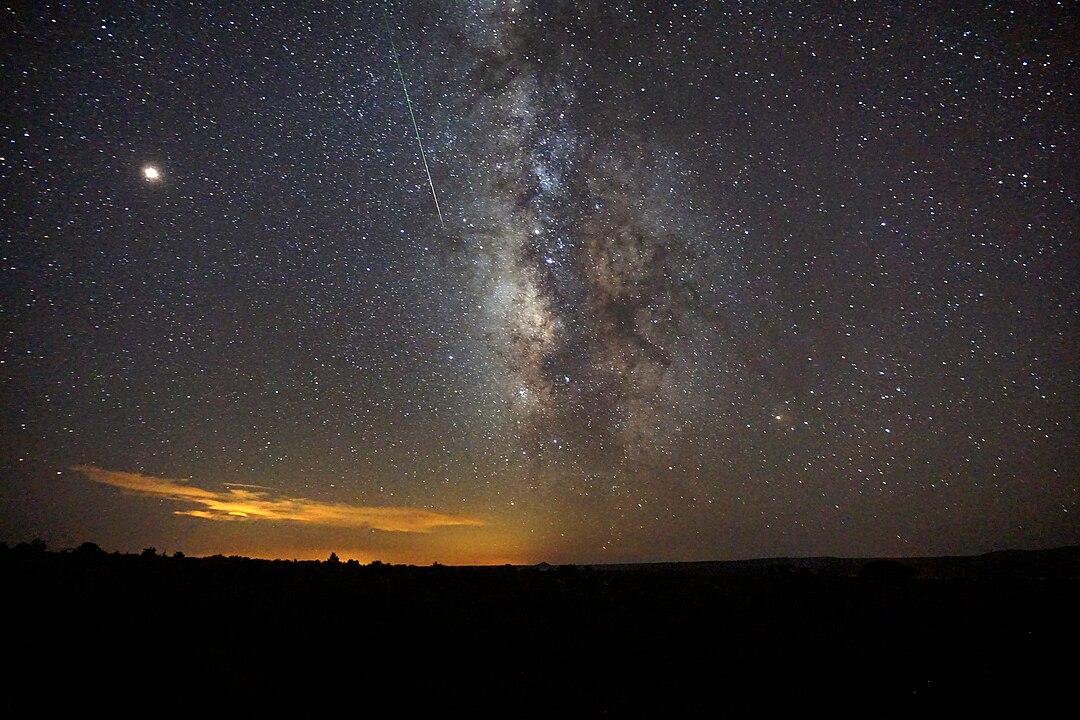
The eclipse coincided with the annual peak of the Perseid meteor shower, leading to increased searches about whether both events could be seen from Omaha. Only the Perseids were visible locally, subject to clouds and light pollution.
The Perseids return to Omaha every August
The 2026 Perseid meteor shower peaked during the night of Aug. 12 into the early hours of Aug. 13, but the shower remains active through Aug. 24. Fewer meteors are usually visible after the peak.
The Perseids return each summer as Earth passes through debris left by Comet 109P/Swift-Tuttle. The strongest activity generally occurs around Aug. 12 or 13, although the exact timing, moonlight and viewing conditions change each year.
More meteors are generally visible between midnight and dawn from locations with dark skies and an open view. Telescopes and binoculars are not needed because they restrict the amount of sky visible at one time.
The American Meteor Society meteor shower calendar provides updated peak dates and moon conditions for upcoming showers.
Partial solar eclipses require eye protection at all times
The Sun is never completely covered during a partial eclipse. Certified eclipse glasses or a safe handheld solar viewer are required throughout the Jan. 26, 2028, and Jan. 14, 2029, events.
Regular sunglasses do not provide sufficient protection. Cameras, binoculars and telescopes also require solar filters attached to the front of the equipment. NASA maintains complete solar eclipse viewing safety instructions.
Stay informed about what’s happening in your community. Your source for stories that inspire — visit HolaNebraska.org for news, culture and community updates across Nebraska.