
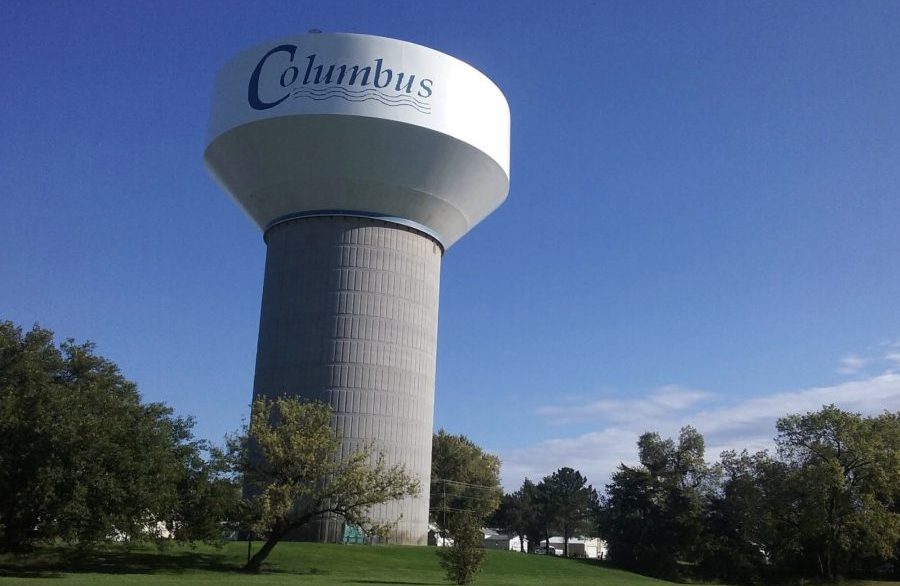
Credit: Cody Sperl. Google Images.
–
Polaris Law Group reported immigration enforcement activity in the Columbus area and outlined constitutional and property rights for residents, families and business owners.
Polaris Law Group issued a community advisory about local activity by U.S. Immigration and Customs Enforcement (ICE) in the Columbus, Nebraska, area.
The law firm said the Columbus Police Department informed it that ICE was conducting operations in the area. The advisory was directed at residents, families and business owners with questions about their rights during possible interactions with immigration agents.
No number of arrests, specific operation locations or list of people detained was reported.
Columbus residents and business owners are addressed in the advisory
Polaris Law Group said immigration activity can create anxiety, fear and uncertainty among Columbus residents, including undocumented people, lawful permanent residents and U.S. citizens.
The firm noted that people in the United States have constitutional rights regardless of immigration status. It also included information for business owners about the difference between areas open to the public and private spaces inside a commercial property.
A business may have public areas, such as dining rooms, lobbies or waiting rooms. It may also have nonpublic areas, such as kitchens, back offices, workshops or employee-only spaces.
To enter nonpublic areas of a business, ICE agents need a judicial search warrant signed by a court judge, according to the legal guidance shared by Polaris Law Group.
Documents tied to residence and legal status
Polaris Law Group said ICE may be attempting to use expedited removal processes in some immigration cases.
To show continuous physical presence in the United States for two years or more, the firm listed documents such as utility bills, tax returns, medical records or lease agreements.
For people with legal status, the documentation mentioned includes a permanent resident card, work permit, visa, original documents or clear copies. Copies of receipt notices from U.S. Citizenship and Immigration Services (USCIS) also appear as documentation tied to pending cases.
Private business areas require a judicial warrant or permission
Business owners may revoke access, deny service and ask agents to leave their premises when agents are in areas open to the public, according to Polaris Law Group’s legal guidance.
The key difference is private space. Agents do not have the right to enter nonpublic areas without a judicial search warrant signed by a judge. An administrative warrant signed by an ICE officer does not serve that purpose.
If agents refuse an explicit order to leave or enter private spaces without a judicial warrant, Polaris Law Group said that conduct may constitute criminal trespass under Nebraska law.
The firm added that business owners have the right to contact local law enforcement to enforce state trespass laws when agents remain in private spaces without judicial authorization.
Homes are protected by the Fourth Amendment
Private residences are protected by the Fourth Amendment of the U.S. Constitution.
ICE cannot enter a home without permission unless agents present a judicial search warrant signed by a court judge, according to the legal guidance cited by Polaris Law Group. An administrative warrant signed by an ICE officer does not authorize entry into a home without consent.
People may keep the door closed, ask for documentation to be slid under the door and speak with officers without opening it, according to that guidance.
Polaris Law Group also warned about phrases that may be used to get someone to open the door, such as “someone hit your car” or “we are just here to talk.” The firm identified those phrases as common tactics used to get around Fourth Amendment protections.
Racial, ethnic or language profiling does not justify a stop
In public places, law enforcement officers need specific, articulable suspicion that an immigration violation has occurred before stopping a person and demanding identification, according to the legal guidance shared by Polaris Law Group.
Racial, ethnic or language profiling alone cannot legally justify a stop.
Civil rights organizations also state that people have the right to remain silent during interactions with immigration authorities and that an administrative deportation or removal order is not the same as a judicial warrant to enter a home.
Witnesses may observe and record from a safe distance
Witnesses to a law enforcement action have a constitutional right to observe and record the interaction from a safe distance, as long as they do not physically obstruct or interfere with agents’ duties.
Polaris Law Group said recordings may be shared with trusted community legal advocates.
The guidance is consistent with materials from civil rights organizations that recognize the right to observe and document interactions with authorities in public spaces, as long as the recording does not interfere with officers’ work.
Stay informed about what’s happening in your community. Your source for stories that inspire — visit HolaNebraska.org for news, culture, and community updates across Nebraska!