
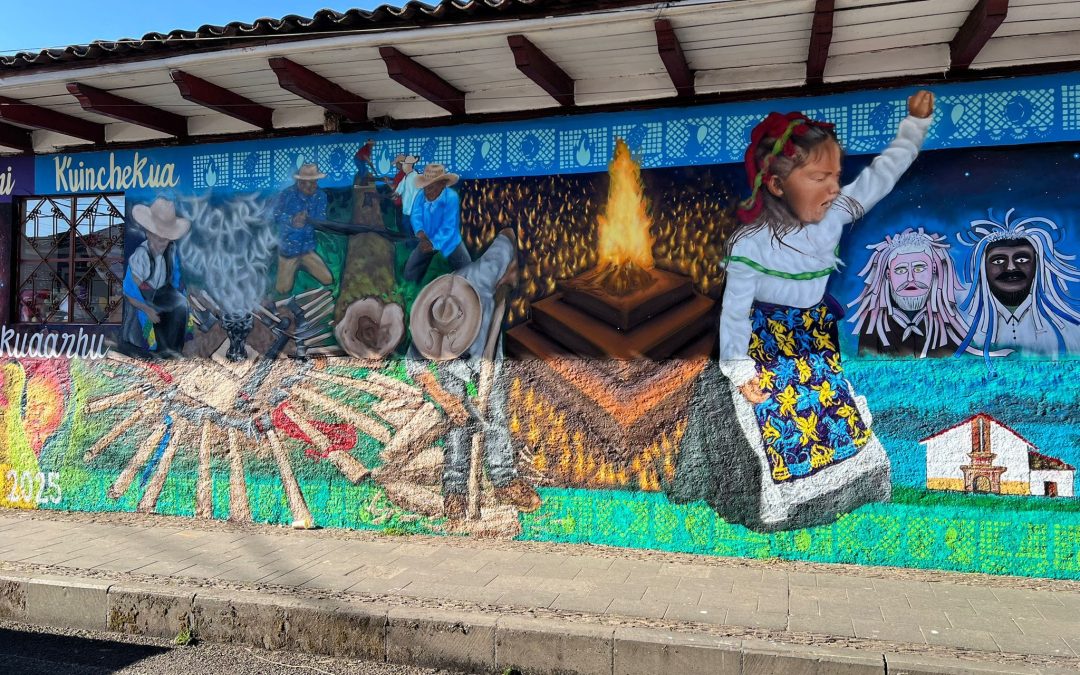
Omaha Muralist Hugo Zamorano traveled to Michoacán to take part in the Purépecha New Year, connecting his art with his cultural roots and ancestral traditions.
Purépecha Culture and Its Traditions
The Purépecha, also known as the Tarascan culture, flourished in northwestern Michoacán, leaving behind a rich legacy of traditions that continue to inspire awe.
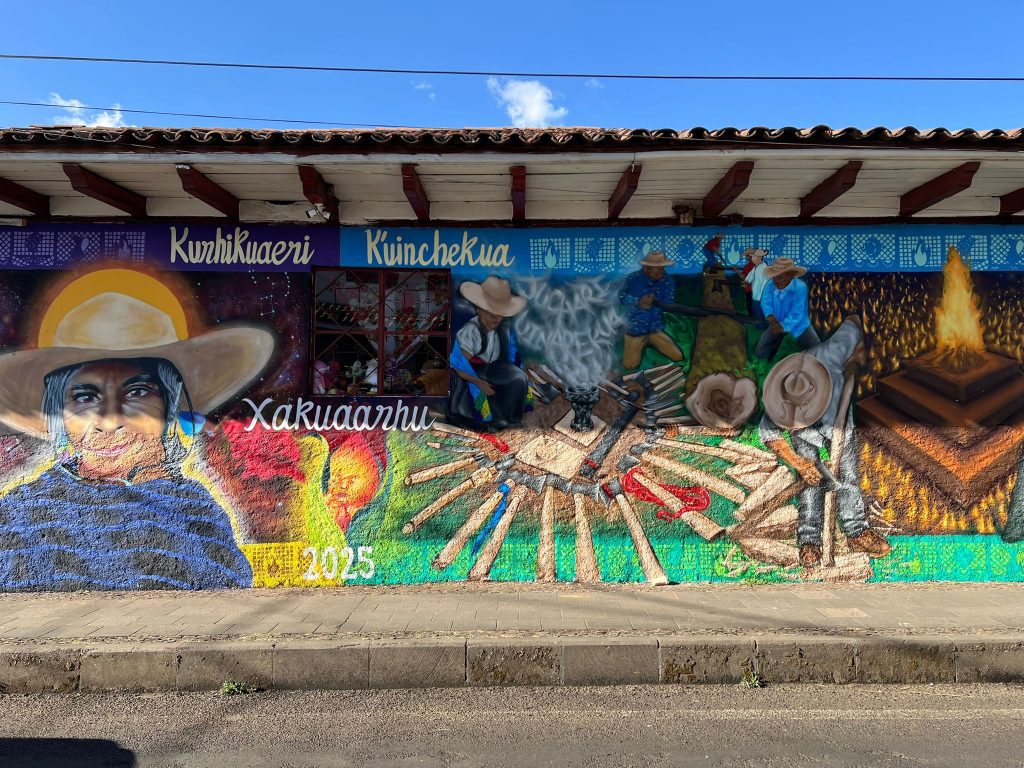
On January 31 and February 1, the town of Santa Clara del Cobre hosted the Kurhíkuaeri K’uinchekua, or Purépecha New Year, marking the start of a new agricultural and spiritual cycle.
The festivities included regional music, dance, and cuisine centered around the lighting of the new fire—a sacred ritual honoring Kurhíkuaeri, the god of fire. The ceremony symbolizes renewal and the unity of the four Purépecha regions: Japóndarhu (the Lake District), Eráxamani (the Canyon of the Eleven Towns), Juátarisi (the Plateau), and the Zacapu Marshlands.
The Artist and His Personal Connection
Grateful for the warmth of the Santa Clara del Cobre community, the Los Angeles–born artist shared, “I feel proud—it’s an honor to paint in this place and learn more about my roots.”
At 33, with murals exhibited in several U.S. cities and in Xalapa, Veracruz, Zamorano knew he needed to fully immerse himself in Purépecha culture “to truly understand and represent it.”
A graduate of the University of Nebraska at Omaha with a Bachelor of Fine Arts, Zamorano painted his first mural at just sixteen. This experience, he said, was profoundly enriching—beginning with lessons about the arrival of the old fire, the darkness, and the passage into light. “From the process of choosing the tree that will be cut for its wood to the blessing of the tools—everything is fascinating,” he explained.
Zamorano drove more than 30 hours to Michoacán, his truck packed with paints, sketchbooks, a blanket, and a sleeping bag. It was worth every mile. “I feel honored to travel abroad and do something that holds such deep meaning for so many people,” he said.
Preserving Cultural Heritage
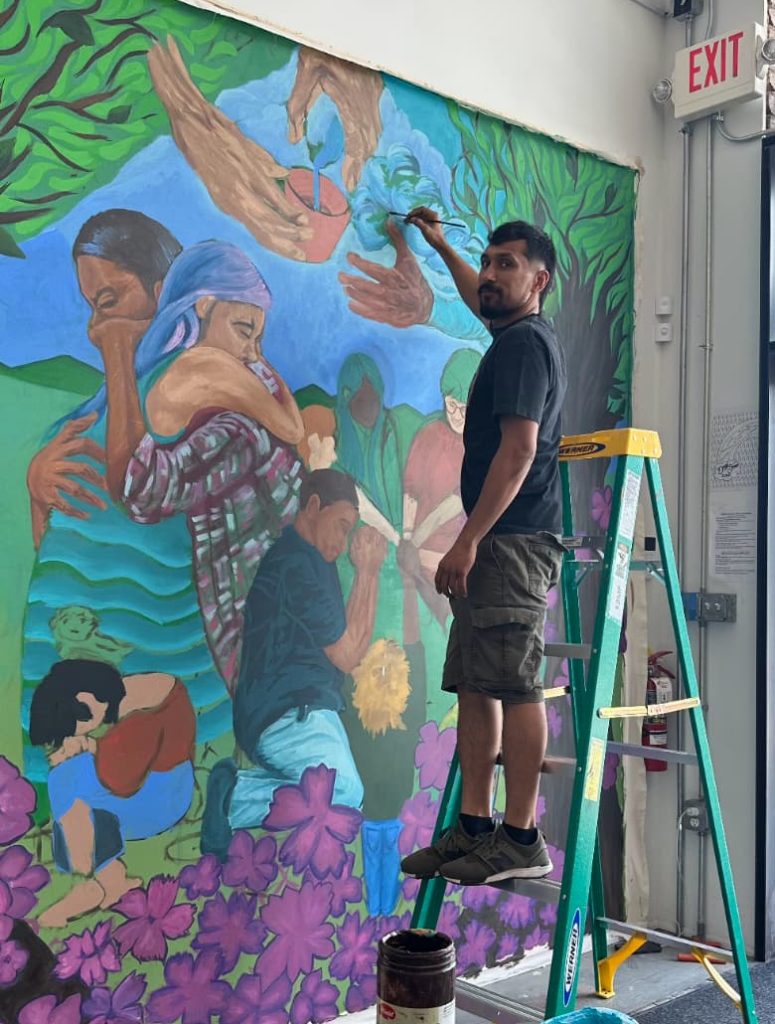
His colleague Marco Antonio Guízar Aparicio, an ENAPU member with a degree in Art and Cultural Heritage, shared the same passion for cultural preservation. His work focuses on keeping Purépecha traditions alive and passing them on to younger generations.
“The new fire is one of Michoacán’s most essential traditions—just as important as the Day of the Dead—because it represents the unity of native cultures, where we all become one,” said Guízar, who participated as a muralist for the fifth time this year.
He credited the project’s success to the women and men who helped prepare the huatapera (community gathering house), to beloved local figure José María ‘Tata Chema’, and to the Office of the Indigenous Community of Villa Escalante.
A graduate of the Intercultural Indigenous University of Michoacán, Guízar added, “Connecting with culture is always nourishing because knowledge is part of our human essence. The closer we are to our roots, the freer we become.”
On the walls of Santa Clara del Cobre, Zamorano’s art bursts with color and form, bridging his artistic present with his ancestral heritage. Like the new fire rekindled each year, his brushstrokes renew a living connection to his roots—illuminating a path for Purépecha traditions to endure in the hearts of new generations.
For Zamorano, returning to Mexico was a powerful reminder that honoring one’s cultural roots not only deepens artistic expression but also grounds the spirit in a truer sense of belonging.
Related: The Omaha muralist honoring his roots in Michoacán
During Omaha’s Hispanic Heritage Month Awards Gala, muralist Hugo Zamorano was recognized as Artist of the Year for his impact on the community and his work connecting art with cultural identity. Read more about his recognition here.
Stay informed about what’s happening in your community. Your source for stories that inspire — visit HolaNebraska.org for news, culture, and community updates across Nebraska!