
‘Nebraska state law is clear: The governor does not have the unilateral authority to change the purpose of any public building,’ attorney says
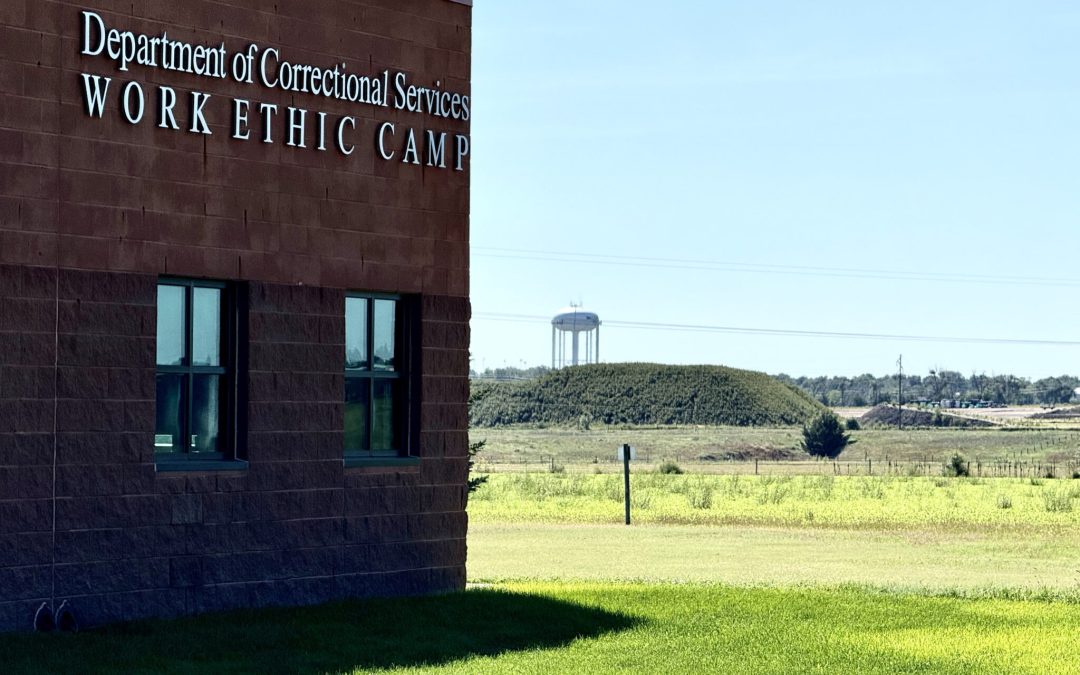
McCook, NE — Thirteen McCook residents filed a lawsuit this week to stop Nebraska officials from converting a state prison into an immigration detention facility. They filed suit with the backing of a former lawmaker who helped pass the law directing the state’s use of the facility.
The 24-page lawsuit, filed Tuesday in Red Willow County District Court, argues Gov. Jim Pillen’s in-progress plan to convert the Work Ethic Camp in McCook would “usurp” legislative authority and violate separation of powers under the Nebraska Constitution and state law. Pillen and Rob Jeffreys, director of Nebraska’s correctional system, are named in the case.
“Nebraska state law is clear: The governor does not have the unilateral authority to change the purpose of any public building,” said Robert McEwen, legal director of Nebraska Appleseed, which is leading the case. “That’s the Legislature’s job.”
Nebraska Appleseed is a nonprofit organization advocating for people in need, including immigrants.
The district court judge assigned to the case dismissed an immediate request for a temporary restraining order on Wednesday.
‘Supreme executive power’
Laura Strimple, a spokesperson for Pillen, said Thursday that the governor “greatly appreciates” that “prompt and well-reasoned” decision.
“We expect and believe that the lawsuit is legally and substantively without merit, and we are confident that it will receive the scrutiny it deserves in our court system,” Strimple said. “Beyond that, this office has no further comment at this time on this pending legal matter.”
Pillen and state and federal officials announced plans on Aug. 19 to repurpose the Work Ethic Camp from a state prison offering rehabilitative programming for low-risk felony offenders to a “Midwest hub” for immigration enforcement. Pillen and U.S. Secretary of Homeland Security Kristi Noem have sought to rebrand the facility as the “Cornhusker Clink.”
Pillen, at that time, said the facility would remain state-owned and operated and be operational by mid-October. Earlier this week, he said it would instead be operational by November.
“There’s some little details, but everything’s been moving in great progress,” Pillen said Tuesday, according to reporting by KETV. “We’re really excited about it.”
Pillen has previously argued state law gives him authority through the creation of the Nebraska Department of Correctional Services, plus a clause in the Nebraska Constitution that “supreme executive power rests with the governor.”
Spokespeople for the Nebraska Governor’s Office, Nebraska Attorney General’s Office and Nebraska Department of Correctional Services had no immediate comment on the lawsuit Thursday.
Following the money
The lead plaintiff, DiAnna Schimek of Lincoln, served in the Nebraska Legislature between 1989 and 2009, including as chair of the Legislature’s Government, Military and Veterans Affairs Committee. She was one of 41 lawmakers who approved the Work Ethic Camp in 1997 at the request of then-Gov. Ben Nelson, a McCook native and the state’s last Democratic governor.
The facility was meant to reduce prison crowding by moving out low-risk offenders and making space for more violent offenders elsewhere. The Work Ethic Camp opened in 2001, and since then, the Legislature has repeatedly appropriated state funds to keep up the facility.
As of last year, the facility had a state budget of at least $9.5 million and about 85 staff, according to September 2024 state budget documents.
Schimek and the 13 McCook residents argue that without legislative approval, Pillen, Jeffreys and other officials can’t convert the facility or use state funds other than how lawmakers have specified. The lawsuit also states the Corrections Department has authority over state prisoners, not non-citizens awaiting civil proceedings seeking to deport them.
The Corrections Department contracted with Outback Fence, a Lincoln-based fencing company, paying $750,000 to install a 12-foot razor-topped fence at the prison by the end of the month, with at least $187,500 already spent, according to the lawsuit.

Nebraska State Patrol Superintendent Bryan Waugh, at podium, joins Nebraska Adj. Gen. Craig Strong at left and Nebraska Department of Correctional Services Director Rob Jeffreys as the state announces a new ICE facility. Aug 19. 2025. (Juan Salinas II/Nebraska Examiner)
To get their feet in the courthouse door, Schimek and the McCook residents argue the case concerns an unlawful expenditure of public funds and a “matter of great public concern.”
Lawyers on behalf of Schimek and the McCook residents sent a demand letter Tuesday to the Nebraska Attorney General’s Office, asking that the “unlawful” actions stop. The plaintiffs had threatened to sue by Wednesday if those demands were ignored or rejected.
“Without an injunction, the plaintiffs will suffer substantial, irreparable harm, which is a hardship that outweighs any hardship the defendants may face,” the lawsuit states.
While many public records requests seeking information about the state-federal plan have been denied, documents released to a government watchdog group indicated that negotiations between Nebraska and federal officials started in March or sooner, while the Legislature was still in session.
McCook residents speak out
In separate affidavits, Schimek and the 13 McCook residents attested to their concerns about the state-federal plan, expressing concern about not having an opportunity to participate in the policy decision before Pillen and others acted.
“I am concerned about the community that I live in becoming a more toxic environment as a result of the WEC being repurposed to become an immigration detention center,” Catherine McDowell of McCook said in her affidavit.
Dale Dueland, a 49-year resident of Red Willow County, said he is an active volunteer for community and civic organizations in McCook. He said his focus has been on building McCook into a “thriving rural community.” He wrote that he worried about “irreversible damage to the economic development and community growth that I have spent my whole life working to build.”
“Specifically, I am concerned that the repurposing of the WEC to be an immigration detention center will negatively impact local businesses, home values and create reputational harm to the organizations that I have served,” Dueland continued.
Some McCook residents expressed concern for McCook children and the “toxic public dialogue” or “fear” the decision had already caused. Ronda Graff said she worried the prison’s repurposing would undermine long-time efforts to create a “welcoming, friendly and engaging community.”

McCook Mayor Linda Taylor speaks during a press conference with Nebraska Gov. Jim Pillen at McCook’s Ben Nelson Regional Airport on Tuesday. (Brigham Larington/McCook Gazette)
Many inmates work in the community, and multiple residents said they appreciate those connections. Will Branham, a member of the McCook Arts Council, said inmates have contributed to the growth of McCook’s arts scene. Matt Sehnert said he’s spoken with men at Work Ethic Camp about career prospects and that they appreciate being seen as “valuable human beings.”
“It was clear to me that the men took great pride in working to improve our community,” Sehnert said in his affidavit.
State Sen. Victor Rountree of Bellevue, a member of the Legislature’s Judiciary Committee, also submitted an affidavit as part of the lawsuit regarding information he had gathered from the executive branch.
The lawsuit seeks preliminary and permanent injunctive relief to halt the state-federal plan and prevent officials from pursuing a similar plan or contract without proper legislative authority.
Red Willow County District Judge Patrick Heng will hear the case during a Thursday afternoon hearing.
—————————
Stay informed about what’s happening in your community. Your source for stories that inspire — visit HolaNebraska.org for news, culture, and community updates across Nebraska!
—————————